Tuesday, December 13, 2011

December is for the Birds

From guest author, Mary Warren, Naturalist at Magee Marsh Wildlife Area and the Sportsman's Migratory Bird Center, Oak Harbor, Ohio 


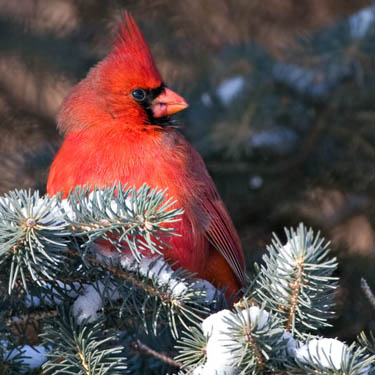
While you are out dashing around looking for the perfect gift, many folks will be outside counting birds. The National Audubon Society will sponsor the 112th Christmas Bird Count from December 14th to January 5th this year. While it’s not a
 BIG YEAR (did you get to see the movie The Big Year? Very funny!), it will be a big event.


On any day during that period, people will be out with binoculars and field guides in hand counting every bird, recording how many and what species, and where they are seeing them. Thousands of volunteers across the Americas will take part in this adventure that has been a tradition for years. You don’t have to be an expert to participate in the Christmas Bird Count (CBC). All eyes and ears are welcome. The data that is collected during these weeks is used to guide conservation actions for bird populations. This tradition began in 1900, making the CBC one of America's longest running wildlife census projects. And you can be a very important part of this fun citizen science project.

Most CBC’s are run through local Audubon chapters. You can go online to find a chapter near you. There are also informal CBC4Kids events sprouting up around the country. First introduced in 2007 in Sonoma Valley, California, this event is specifically for kids and families and encourages enjoyment and respect for nature together. For more info you can check it out at http://www.sonomabirding.com/

If you are in Northwest Ohio, there will be a CBC4Kids at Magee Marsh on January 14th, 2012. There will be lots of fun activities planned that day. For more info, you can email mary.warren@dnr.state.oh.us
From g2goutside.com


We hope that you will consider starting a new tradition this year by getting OUTSIDE to count the birds in your area and to take time to enjoy the beauty of our natural world!

Wednesday, November 23, 2011

Got H20?

I have decided to start posting more to this blog.  Life is busy and it's been a long time since my last post.  So, keep your eyes open for more to come.  We hope to offer more writers, more topics, and on a more timely basis.

This post is from one of our many guest authors, Jamey Graham, Wildlife Communications Specialist in our Akron office.  Enjoy!

Most people who enjoy backyard or schoolyard bird watching know that providing even the simplest of bird feeding stations will attract our feathered friends, not to mention a wide array of other wild creatures. What many folks don’t think about though is how well watering stations work at reeling in wildlife. In the midst of a snowy, winter day, birds might struggle a bit to find high-energy, nutritious food. But they often struggle harder in a battle to find clean, unfrozen water. Both humans and wildlife can go several days without food, albeit grumbling bellies, but our bodies must be hydrated much more frequently in order to function comfortably.


There are a couple of ways to provide a reliable supply of fresh drinking water for wildlife. And, as with many hobbies, a watering station can be as elaborate and expensive or simple and affordable as you want it to be. Obviously, a traditional birdbath works when temperatures don’t dip below freezing. Keep in mind that this water does not have to be deep. Most birds prefer the water to be very shallow, just a few inches.  So if you have a deep bowl, place a large rock in the center to help displace the H2O. When winter does indeed set in and the temps fall, a heated birdbath or water heater (for a terra cotta, concrete, granite or plastic bowl) will keep the water from freezing. You can purchase either of these at a home and garden department store or specialty supply store that focuses on attracting wildlife. Prices and selection vary greatly depending on where you shop of course. But plan on spending roughly $30-$80 for a good quality item that should last a couple of seasons if not more. You can purchase electric or solar energy products, but keep in mind that solar products tend to cost more initially, but will save you money over time.

As a side note, if you are struggling to attract critters to your feeding and watering stations, you may need to move these stations closer to habitat or plant some vegetation nearby. Birds feel especially vulnerable out in the open, so protective cover in the forms of shrubs, trees, and tall grasses can make a world of difference with your success at attracting wildlife.


Keep the water clean by changing it often-maybe once each week- and you’ll reap the rewards as will your avian visitors. If you need help identifying all of the wonderful birds visiting your property, check out the Division of Wildlife’s interactive guide for a free color guidebook and sound CD.

Tuesday, August 30, 2011

WANT YOUR KIDS TO GET INTO HARVARD? TELL ‘EM TO GO OUTSIDE! - Richard Louv

WANT YOUR KIDS TO GET INTO HARVARD? TELL ‘EM TO GO OUTSIDE! - Richard Louv

I'm reposting an interesting blog from Richard Louv, the author of Last Child in the Woods and The Nature Principle. I'd love to hear your comments on this idea, relative to Ohio. Let's hear what you think!

Tuesday, August 16, 2011

Ohio in Seasonal Transition

I can't believe it's almost fall! It seems like I say this every year, but where on earth did this summer go?  I had to get a blanket out last night for the first time.  It is a bittersweet feeling.

There were subtle reminders of the looming fall that I chose to ignore.  Things like an uptick in the numbers of hummingbirds coming to my feeders.  I know they are getting ready for their big migrations.  So I need to keep on top of my feeders.  By the way, don't believe that old wives tale that if you don't take the feeders down, hummingbirds won't migrate.  It's not true.  Leaving them up can provide valuable nutrition to those slow to migrate.  But nature's migratory urge is much more powerful than any tempting treat we can put in our feeders.  They'll go when they need to.

I've also noticed more spiders in the yard, much to my chagrin.  I am not a lover of spiders, to be sure.  But, I do appreciate their role in the food chain.  And, I've even been able to muster up enough nerve to observe a few of these creatures to see what type of web they weave, physical characteristics, etc, before I get the willies and have to walk away. :-)  If you'd like to learn more about Ohio's spiders, the Division of Wildlife has a very nice new field guide that you can order by contacting 1-800-WILDLIFE.

Another sign of the coming fall is the explosion of blooms seen in my flower beds.  It seems like they are trying one last ditch effort to attract as many pollinators as possible before that first frost.  And they make excellent table bouquets.

Then there is the bane of most birders, fall warblers.  As if these little birds aren't hard enough to identify in spring when they are in their full color glory.  In the fall, the males and females are both drab olive brown and you really have to get a good look at them to pick out any distinguishing field marks.  It is quite a challenge if you're up for it.  Shorebirds are migrating through as well.  With some species having to cross two continents in their journey south, they are some of the earliest migrants.  Local lakes and rivers are at their low water points this time of year and their mud flats are exposed.  Scan any of these flat, damp spots and you'll likely find several different species of these long-legged waders.  Sometimes collectively known as sandpipers, some species you might see include sanderlings, dowitchers, plovers, yellowlegs, and, of course, multiple species of sandpipers.  You'll find them actively searching for aquatic invertebrates deep in the mud.  You can find photos and order field guides for both warblers and shorebirds on our website at http://www.wildohio.com/

These transitional times of year are when I think nature is at its most interesting.  Some careful observations around your schoolyard, backyard or local park can yield some wonderfully curious sites, smells and sounds that may not be around in the middle of a season.  Take a moment to discover Ohio in her seasonal transition.

Thursday, May 19, 2011

Schoolyard Habitat Project Guide from the US Fish & Wildlife Service

The U.S. Fish and Wildlife Service has recently revised their Schoolyard Habitat Project Guide

The Schoolyard Habitat Program helps teachers and students create wildlife habitat at their own schools. Typical projects include: wetlands, meadows, forests and variations based on specific ecoregions.


Many projects are planned through multiple phases and change over time as children from various classes build upon the existing work of past students.

This 132 page guide provides a comprehensive resource to support new and existing habitat improvement projects.  The guide includes information on the following topics:
  1. Forming a Team
  2. Developing a Master Plan for your site
  3. Assessing the Project Site
  4. Designing Your Project
  5. Deciding Money Matters
  6. Project Installation Tips
  7. Developing a Maintenance Plan
  8. Using the Site
  9. Sharing Your Story
  10. Includes Appendices on Specific Habitat Types, Equipment, Choosing Plants, Soil Testing, and more!
You can download the entire guide from their website

You can also check out the Ohio Division of Wildlife's WILD School Site program on our website.  We offer grants, consultations, workshops and a certification program for Ohio schools.

Happy Planting!

Monday, April 25, 2011

WILD School Sites, Schoolyard Habitats, Outdoor Classrooms, Land Labs, Oh My!

Well folks,

It's that time of year again! Here at the Ohio Division of Wildlife's Central Office, we're purchasing new plants, mulch, and cleaning our gardening tools, bird houses, and flower beds in preparation for the spring season in our WILD School Site Demonstration Area.  I know that a lot of schools are doing the same thing.  Our WILD School Sites Small Grant program is rolling along full steam.  And we are hearing from schools regularly that they are progressing with their lessons in their own schoolyards.  Let us know how things are going on your school grounds.  Comments can be posted below.

Also, if you're new to this land lab thing, the National Wildlife Federation has some great tools and resources that you can utilize to get you started.  Check out their offerings below! And happy planting! Both plants and nature kids!  And get outdoors!


Webinar—Summer Maintenance Planning for Your Schoolyard Habitat


May is Garden for Wildlife Month—a special time of year to celebrate the benefits of creating a Schoolyard Habitat. Celebrate with your students and make a commitment to use your outdoor classroom at least once a week in May. National Wildlife can help you with ideas and resources for taking your students outside during this busy month. We offer lesson plans, a Schoolyard Habitat How-to Guide, and free webinars.

We are offering a free webinar on May 10th from 6-7 p.m. Eastern on how to maintain your Schoolyard Habitat over the summer and throughout the year. We will cover what you need to account for in your summer plan, how engage the community and recruit volunteer assistance, and how to develop a maintenance plan for the entire year.

Sign Up Now!

Tuesday, February 1, 2011

In Praise of Winter

Winter is often when we have very mixed emotions about the weather.  It can be gray and bleak, bitter cold and damp, and even a bit treacherous on occasion.  But, I still say that living in a region that still has four seasons is a treat.  I want to share an essay written by Paul Schiff, retired wildlife educator, that was in our Wild Ohio Magazine over 18 years ago.  I think his sentiment still rings true today.  Enjoy!

In Praise of Winter
by Paul Schiff

Winter. Cold, wet, snowy winter.  Bleak, gray, barren, lifeless, depressing winter.  Poetry and song dismiss winter in favor of themes like the good ol' summertime and autumn leaves. It's difficult to find praise of winter, other than when it's referenced as a foreteller of spring.  And yet...

There are bright sunny days after a new snow, rosy cheeked children with sleds, snowmen, rabbit tracks to follow and winter birds at the feeder; winter has its moments.

For those of us who spend most of our leisure waking moments in the out-of-doors, winter becomes a challenge.  With the challenge met and feet snug in warm comfortable boots, winter is perhaps nature's most revealing time of year.

You can see things in winter that are hidden in other times.  Hidden by leaves and the dominance of green and growing things.

Last January I saw a red fox sunning itself on a hay bale left in the field.  If the fox hadn't raised its head I might not have noticed. There was a new snow and the red of the fox in the spotlight of winter sun peeking through the clouds was remarkable.  You won't see that in June.

I'd walked the day for the fun of seeing tracks and other winter marvels in the new snow.  I followed a pheasant trail until the bright colored bird flushed with a loud cackle from a bittersweet tangle in an old fencerow.  I automatically raised an imaginary shotgun and said "Bang" as my line of sight swung in front of the bird.  Pheasant season was out.  The old boy was safe.

A few berries that hung yet on the bittersweet looked like Christmas tree ornaments.  Juncos and song sparrows played hopscotch down the fencerow in front of me as I stopped for a closer look.

Fencerows are neat.  They provide food and travel lanes for wildlife of all kinds, especially in the winter.  But they are a landscape feature that is quickly disappearing in favor of larger and larger fields for monocultures of corn and beans.

You can walk the riparian corridor of a small stream more easily in winter.  You can see where a mink explored a root tangle and where other animals have visited any unfrozen trickle for a drink.  You can see squirrel leaf nests high among the branches of streamside cottonwoods and sycamores, and where deer have nipped buds and left their hoof prints in the mud or snow.

There is of course the occasional deep snow or severe blow--the winter of "76 or the 1950 snow (I don't remember this one, but I've been told it was a doozy).  These memories and the potential of extremes make winter weather watching exciting.  The first thing I do when the weather is at its foulest, is to find some excuses to venture out.  We should all experience this and imagine what it might have been like before the time of flip the switch for creature comfort; and what it's like for wildlife.

Wildlife can have a tough time in winter.  When deep snow or freezing rain cover available food survival is a struggle.  Of course wildlife survival is a struggle all year long.  That's part of the plan.  And in truth, wildlife has survived Midwest winters for centuries before people were around to worry about it.  The axe and plow doom more wildlife than the most severe winter. 

So dress right, eat your oatmeal.  Just like wildlife, our choices are to adapt or migrate.  If we choose to adapt and explore winter for all it's worth, we should find plenty to like.  And as long as the present rotation of seasons includes just one winter, I wouldn't trade it for any other season.

Thursday, December 30, 2010

Happy New Year! A Year's Worth of Good Behaviors.

It's so hard to believe that it's almost 2011 already.  It seems the older you get, the faster time goes by.  So, we sit and make some New Year's resolutions that often involve exercise or eating right or enjoying life more.  And, how long do we stick with them...probably till about mid-February if we're lucky.  So, how does one start healthy habits and KEEP them? General consensus says that if you can do one thing at a time and do it for a month, then the habit is more likely to stick.  So, here is a whole year's worth of monthly healthy habits you can do for yourself, your students, your family, and the outdoors:

January--Plan a Garden!
Growing your own veggies is fun and healthy.  This can be done in your own backyard or on your school grounds as part of your life science curriculum, art curriculum and family and consumer science courses.  Pouring through all the seed catalogs that come out this month is a great way to budget and plan what you'll grow the rest of the year.  And it's a great way to spend a quiet hour at home on the couch!

February--Swap For a Healthy Snack!
Small steps are the key for eating healthy.  There is a lot of discussion over which is better, local or organic, when it comes to produce.  But, either is good if you're making the choice to eat a fruit or veggie everyday instead of something from the vending machine or convenience store.  This small step could save you several hundred calories everyday, which can add up to losing a pound or two a week.  Try a cup of blueberries instead of a handful of chips, or an apple instead of a candy bar.  Your waistline will thank you at the end of the month.

March--Start the Seeds!
If you're planning a garden and want to start your plants from seed, this is the month to do it in Ohio.  Most plants take about 6 weeks to get to a height that's appropriate to transplant.  This is also a fun activity to do with your children or students.  They get a lot of satisfaction out of seeing the first little leaves poke out of the soil, and even more when they get to transplant them in May or June.

April--Get Outside for 15 Minutes Everyday!
Again, starting small will make the difference in your success.  If you're someone who doesn't like to exercise, walking in nature is the easiest and cheapest type of exercise you can do.  And, there are plenty of free parks and nature trails in Ohio to access.  Take a pair of binoculars or a camera with you, it will seem less like work and you'll get to see some birds or take some photos of some of Ohio's beautiful spring wildflowers while you're there.  And you'll be amazed what it can do for your frazzled state of mind!

May--Plant That Garden!
One of the best forms of exercise and relaxation is gardening.  It can be a peaceful yet challenging way to spend a few hours outdoors.  And, with how many forms of exercise do you actually get to eat your efforts?  And again, this is an excellent way to spend time with your children or students.  Kids love to get dirty and what better, safer place to do that than in the garden.

June--Get Outside for 45 Minutes Everyday!
With the warm weather and the kids out of school, now is when you can really take the time to get outdoors.  Take the dog, take the kids, take the Frisbee, fishing rods, bikes or GPS and Get Outdoors!!

July--Swap For a Healthy Drink!
With the hot weather, keeping an eye on what you're drinking everyday can really make a difference if you're trying to lose a few pounds.  Sodas, juices, flavored water and sports drinks are loaded with sugar and calories.  Swapping out a glass of water for even one or two bottles of these high calorie drinks can lead to shedding a couple of pounds a month.  If you just can't take water, try adding some lemon to it.  Drinking diet versions of sodas and sports drinks is better than full sugar versions, but water is the best source of hydration on a hot summer day.

August--Swap for a Healthy Meal!
It's state and county fair time and there are a lot of delicious but VERY unhealthy foods to indulge in at these events.  So, one thing to do this month is to swap out a high calorie meal for one that's more healthy.  And, with the produce in your new garden coming on right now, this will make it even easier to try new recipes that are loaded with veggies and herbs.  You can even go meatless for one day a week! And, with all the good produce available at the farmer's markets this time of year, you should have plenty of tasty alternatives to try.  Experiment with new veggies and fruits in your kitchen.  There are a lot of great resources online for trying new cooking ideas.

September--Feed the Birds!
This time of year is perfect for starting a bird feeding station in your yard or schoolyard.  No matter where you live, you'll attract some birds with even the simplest feeding station.  All it takes is one feeder that's located near a window and some cover for the birds, such as a bush or tree, and you'll enjoy the beginning of a regular cast of visitors for the coming winter months.

October--Start a New Hobby!
The days are getting shorter, the kids have settled back into their school routines and, if you're like me, this is the time of year when you're looking for something to do.  So, find a new hobby, preferably one that gets you outdoors.  Whether it's hunting, fishing, hiking, geocaching, cross country skiing, canoeing or any other activity, this is a good time to get the ball rolling on any new hobby.  Having a hobby that you enjoy is proven to reduce stress and anxiety.  So, ease your mind by getting outside with a new hobby!

November--Eat at Home at Least Twice a Week!
Eating a home cooked meal is not only satisfying, but it's typically healthier than any take-out, fast food, or restaurant meal you can buy.  You can control the portion size, the amount of salt and fat, and you get to spend some time with your family knowing you're giving them a good meal.

December--Find an Environmental or Conservation Group to Join and/or Support!
One of the best indications of a person's support of the environment is their willingness to put up or shut up, so to speak.  If a person is willing to spend their time and money on a cause, that is a true mark of support.  So, if you're willing to give of your time, energy, expertise and funds, December is an excellent time to join any organization.  Many groups are looking for support this time of year to raise awareness of social and environmental issues.  And, an end of the year donation to a charitable or non-profit organization can be a tax benefit in the following year.  So check out the websites of your favorite organizations and see how you can help their cause, and make it your cause too!

I hope this list gives you lots of ideas and challenges you to make some healthy and positive changes in your life.  I know I'll be doing a few of these myself.  I hope you all have a safe and Happy New Year!
Monday, October 18, 2010

A great day for a ramble

On two occasions since my last posting, I was sharply reminded of the fact that I do not get outside enough.  Or, more importantly, I don't take my daughter outside enough.

The first was a short and, what I suspect was, an off-the-cuff speech at the Statewide Leave No Child Inside Call to Action Rally on September 24th by the Director of Ohio's EPA.  Chris Korleski stood up and lamented not spending enough time outdoors with his own children and openly wondered how much he was missing.  Director Korleski then advised us all to "get off our butts" and get outside with our children before too much time has passed.  It was an informal and funny pronouncement, but it hit home with a lot people.  Shortly afterwards, ODNR Director Sean Logan introduced a Proclamation from Governor Strickland that reads that all Ohio children shall have the opportunity to by physically active, have access to nature, discover plants and animals, and learn how to give back to nature.  These two speeches gave me pause about my own efforts with my daughter.  And, I know I wasn't the only one in the room looking in the mirror as it was one of the primary discussions at the end of the event. 

The other was a small, seemingly insignificant act that my daughter did the other night.  I'd had a bit of a rough day at work and, while I normally am pretty good about not bringing work home, either in my hands or in my head, I had gotten on the computer to check and see the progression of a discussion that was ongoing on emails at work.  My daughter, who is not quite two, came up and physically pulled my hand off the computer mouse and repeated "Outside!!" over and over again as she pulled.  At first, I tried to put her off, but she is a pretty persistent little girl and kept pulling and yelling "Outside!"  Then it hit me...she's right!  And off we went. 

I put her in the car and we went down the road to the new Natural Play Area I'd read about at Prairie Ridge Metropark.  It was a beautiful fall evening and I was surprised that there weren't other people there.  But, I was also glad.  We had the whole place to ourselves.  So, we took a walk, she got filthy dirty in her pink bibs as she stumbled and bumbled around down the paths.  It put me to mind of one of her books where Piglet tells Pooh "It's a great day for a ramble."  These natural play areas are really a great way to let kids explore off trail the way we used to when we were kids.  I'm glad that parks are starting to add these to their offerings.  And, I know my daughter loved it too. 

Have you rambled with your kids today?

Monday, September 20, 2010

National Public Lands Day

September 25, 2010

National Public Lands Day (NPLD) -- the nation's largest hands-on volunteer effort to improve and enhance America's public lands -- is just a week away. It provides an invaluable service-learning opportunity for students this fall. NPLD engages a diverse audience of adult and youth volunteers, whether at a national park, nature center or school garden. Go online to find an existing project or register your own.

NPLD is also a great opportunity to bring learning outdoors and educate students of all ages about environmental stewardship. For ideas, check out NPLD's educational resource library, which includes lesson plans, project ideas, recreational opportunities and more.


NPLD and EE Week are programs of the National Environmental Education Foundation.